
Categories
Para alpine skiing is practiced in three main categories, each with specific equipment adaptations: seated, standing, and visually impaired
Seated Category
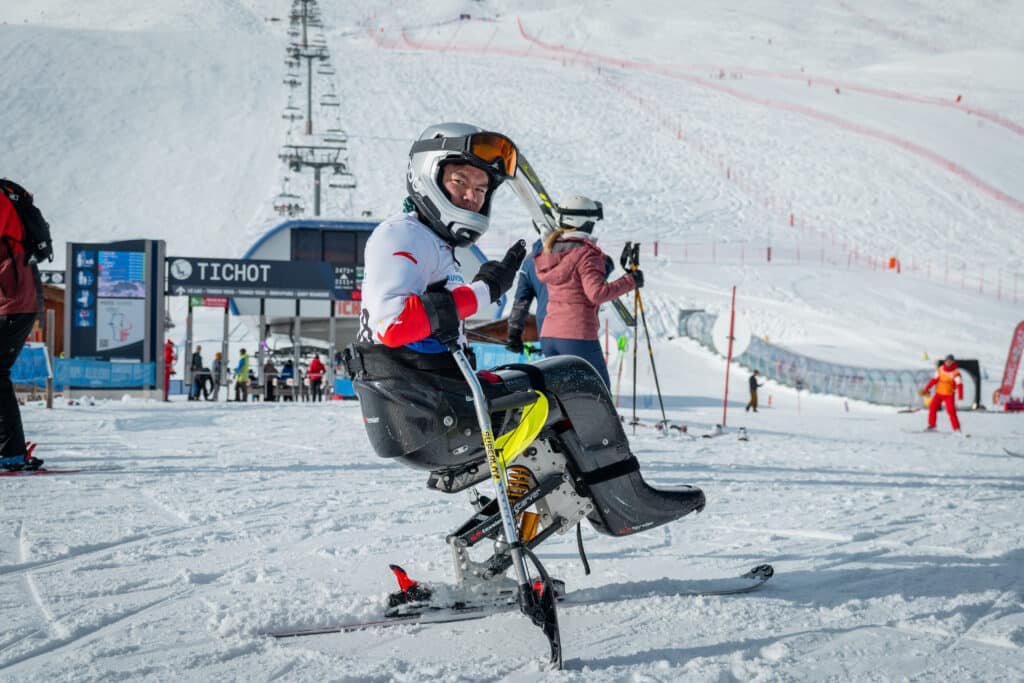
Who is it for? Athletes with paraplegia, tetraplegia, or disabilities affecting the lower limbs and/or the trunk (classes LW10 through LW12).
The equipment used is the ski chair (or uniski/dual-ski), which consists of an ergonomic shell attached to one or two skis, a hydraulic system to absorb shocks, and support straps to secure the athlete to the device. The equipment is complemented by stabilizers, which are short poles with an upper section shaped like a crutch (providing a firm grip) and a lower section equipped with a mini-ski to aid in turning and braking.
STANDING Category
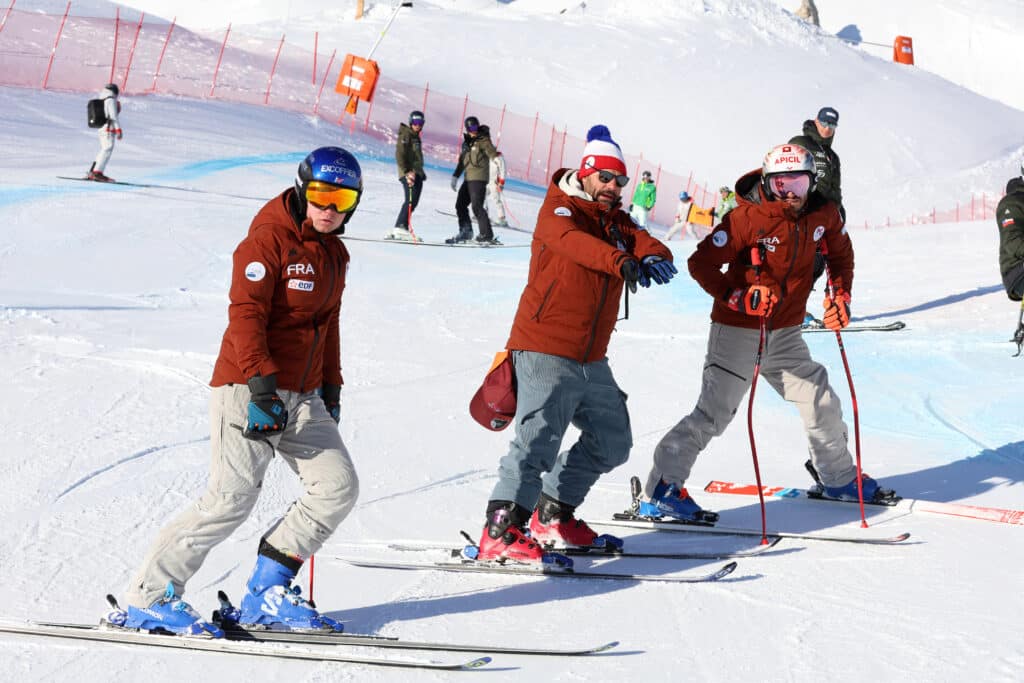
Who is it for? Athletes who are able to ski in an upright position despite a physical disability (classes LW1 through LW9) affecting the upper and/or lower body.
Paraskiers use one or two skis, depending on their disability, as well as standard poles or larger stabilizer poles (for added support).
Category: Visually Impaired
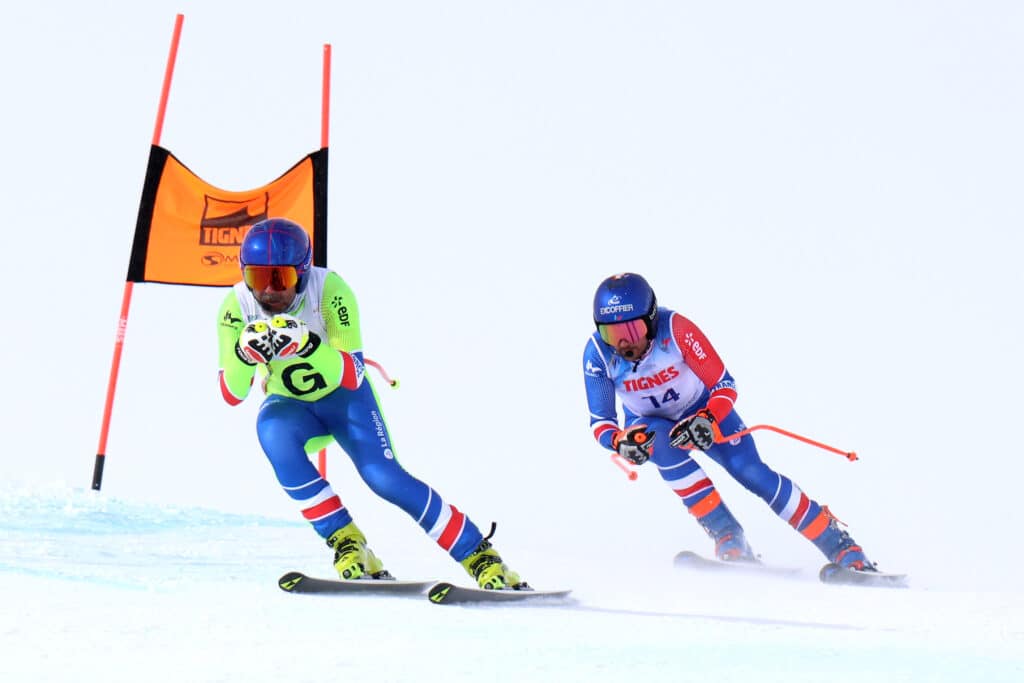
Who is it for? Blind or visually impaired athletes (classes AS1 through AS3).
Their equipment is the same as that used by able-bodied athletes, but a guide is required. The guide skis in front of the athlete and wears a fluorescent vest with a “G” on the bib; the guide communicates via a microphone and earpiece to direct the athlete’s path.
A few additional rules apply to this category:
- Only the athlete is timed.
- The athlete and guide must pass through all the gates on the course.
Disability Compensation System
To ensure fairness in competition, each athlete’s time is weighted by a coefficient specific to their disability category. These coefficients are calculated statistically based on recent results. They are revised regularly to reflect changes in performance.
More generally, here is the list of disabilities for which para alpine skiing is open to competition:
- Orthopedic disability
- Paraplegia and tetraplegia
- Hemiplegia
- Cerebral paralysis
- Progressive neurological disability
- Congenital or acquired neurological disability
You can find a video explaining and illustrating these disabilities on the French Disabled Sports Federation’s channel:
The Virtus Championships, for other handicaps
Virtus alpine skiing competitions are international championships reserved for athletes with intellectual disabilities or autism spectrum disorders (ASD). They are organized by Virtus, a global federation separate from the International Paralympic Committee (IPC). Tignes hosted the Virtus World Championships in 2025. These events are therefore not part of the Paralympic Games, nor will they be featured in Tignes for the 2027 World Championships.
Want to learn more about the races ?
DON’T MISS ANY News